





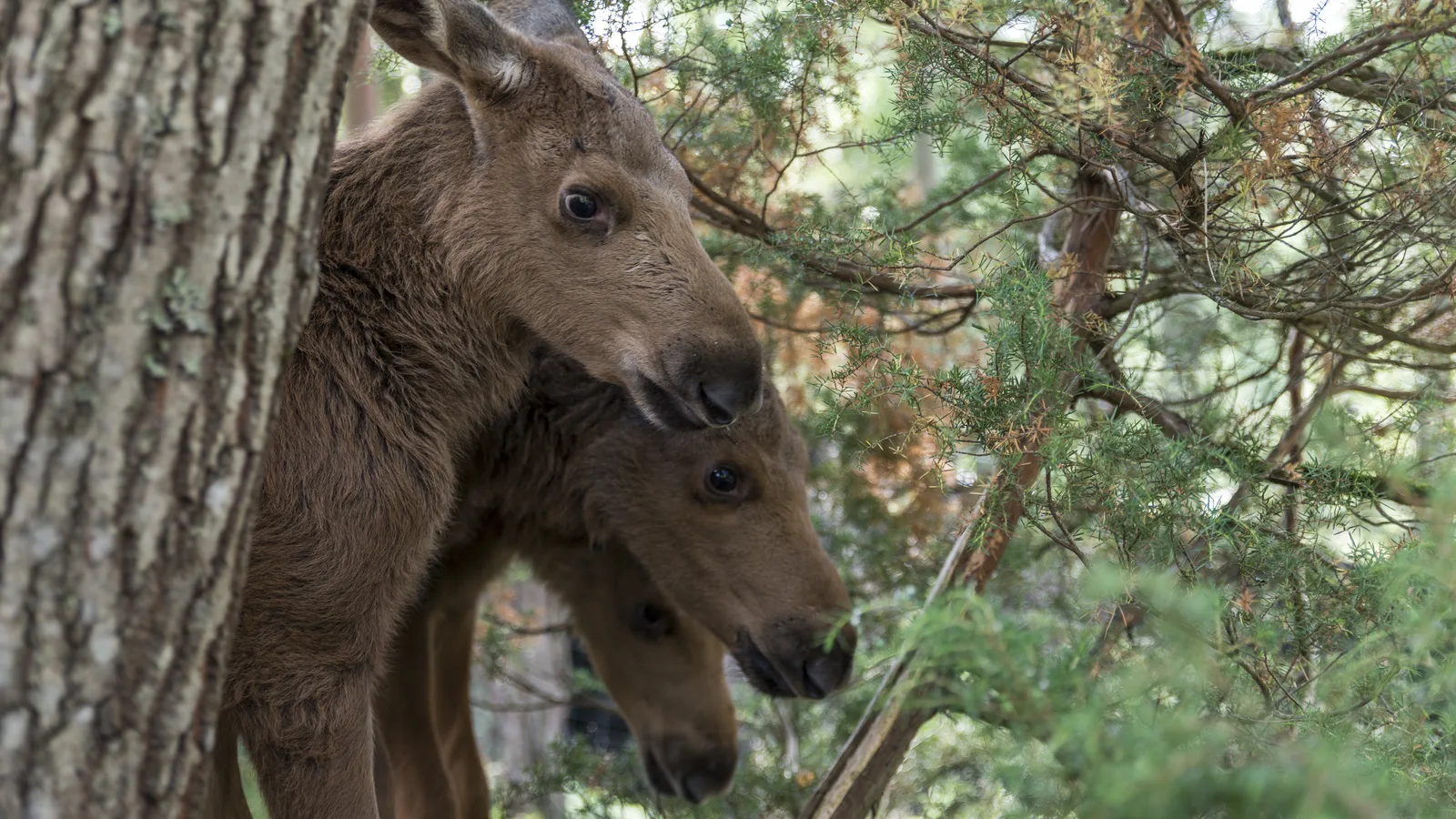
Cheyenne Mountain Zoo has two new residents in its moose yard. Two rescued Alaska moose calves, a female and a male, both about seven months old, arrived in Colorado Springs this week after a 17-hour trip from Anchorage, and by Thursday they were already eating browse outside in their new home in the zoo's Rocky Mountain Wild area.
They are not the only young animals settling in on the mountainside. Two orphaned grizzly bear cubs, Scout and Ranger, went on view to members and guests for the first time on Tuesday, Nov. 10, in a renovated grizzly habitat in the same part of the zoo.
Where the calves came from
Both calves spent their first months at The Alaska Zoo in Anchorage, which takes in animals that would not survive in the wild. According to Cheyenne Mountain Zoo, conflicts between moose and people around Anchorage are common enough that rescuing calves is a regular part of that zoo's summer.
The two calves are not related. The female lost her mother, who was killed either in a vehicle collision or in a conflict with people, and wildlife authorities brought her to The Alaska Zoo, where she needed care around the clock in her first weeks. The male was separated from his mother and his twin, and the family never reunited. The Alaska Zoo took in both of them in May, when they were likely only days or weeks old, and they spent the summer together. The female is the larger of the two.
A moose keeper from The Alaska Zoo traveled with the calves on their flights to Colorado Springs, checking on them and keeping them fed and watered along the way. Two members of the Colorado Springs zoo's communications staff went to Anchorage to meet the animals and document the trip, and the zoo posted updates from the journey on its YouTube, TikTok, Instagram and Facebook accounts.
A familiar path to the Springs
The new arrivals follow a route the zoo has used before. Atka, the Alaska moose who died in September 2026, also came from The Alaska Zoo's rescue program. Before Atka, the zoo cared for a moose named Tahoma, who died in 2020.
The zoo says it is one of the only zoos in the United States accredited by the Association of Zoos and Aquariums that houses moose. Its keepers developed moose care practices through their work with Tahoma and Atka, including formulating diets, testing a prosthetic toe, and training the animals to take part in their own blood draws and hoof care.
The calves have not been named yet. Their care team has been babyproofing the moose yard so the pair can explore, play and train safely, and the zoo plans to expand their outdoor space as they get used to the terrain, then adapt the yard again as they grow into adults.
Scout and Ranger, the grizzly cubs
The grizzly cubs arrived at the zoo in June 2026 after a 10-hour drive from Montana, when they were about six months old. Their mother had a long history of conflicts with people and human-related attractants and was euthanized, leaving the cubs orphaned. The zoo notes that they are grandcubs of grizzly bear 399, a well-known wild grizzly.
On Monday, Nov. 9, the cubs explored their renovated habitat for the first time, and the viewing area opened the next day. The zoo has set the area up as a quiet zone while the cubs adjust, and they may spend some of their time in dens behind the scenes. The cubs have been meeting the zoo's two 21-year-old grizzlies, Emmett and Digger, through protective barriers; they will not share space with them.
The public helped choose the cubs' names through a vote that took a minimum $5 donation per ballot. Together with the zoo's own conservation funds, the vote sent $18,000 to the Vital Ground Foundation for its work protecting grizzly habitat in Montana.
Seeing them
Neither the calves nor the cubs are guaranteed to be in view on any given visit while they settle in, since both have barns or dens they can retreat to. The zoo posts updates on its social channels, including when the calves move into their yard within guest view.
Cheyenne Mountain Zoo is at 4250 Cheyenne Mountain Zoo Road in Colorado Springs. Daytime hours are 9 a.m. to 5 p.m. daily, and advance tickets are required for members and nonmembers alike; rideshare tickets are available separately. The zoo closes early, at 3 p.m., on Thanksgiving Day, Nov. 26, and from Dec. 2 through Jan. 1, 2027, for its evening events.
Those evenings belong to Electric Safari, which returns for its 36th year on Friday, Dec. 4, and runs nightly through Jan. 1, 2027, except Christmas Eve. The zoo describes more than 50 acres of lights, more than 90 handmade light sculptures and a nightly drone show, with Santa on site through Dec. 23. Electric Safari is free for zoo members; timed tickets are on sale at cmzoo.org. Founded in 1926, the zoo operates without tax support and relies on admissions, memberships, events and donations.
Loading comments…